Every year, thousands of companies in India quietly fall behind on their ROC filings. A missed AGM deadline here. An AOC-4 not submitted there. Before long, ₹100 per day in additional fees starts accumulating — with no upper cap — and what began as a small oversight turns into a five or six-figure compliance liability.
For many founders, especially those running MSMEs, startups, or companies that are no longer active, this penalty burden becomes a reason to do nothing. The cost of catching up seems higher than the cost of staying non-compliant. And so the backlog grows.
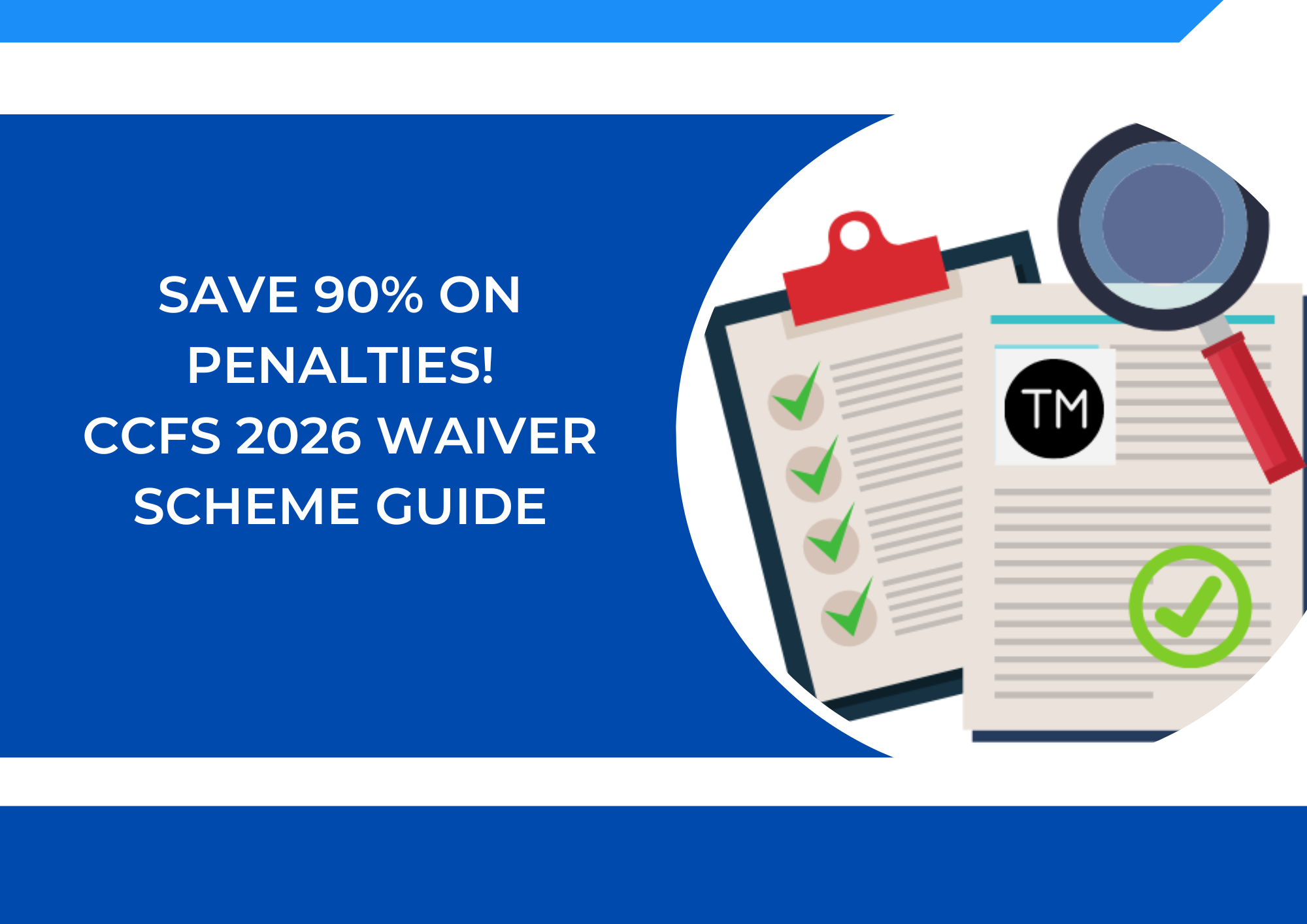
The Ministry of Corporate Affairs understands this problem. And through MCA General Circular No. 01/2026 dated 24th February 2026, it has introduced a time-bound solution — the Companies Compliance Facilitation Scheme, 2026 (CCFS-2026).
Here is everything you need to understand about what the scheme offers, who it is designed for, and why the window between 15th April 2026 and 15th July 2026 matters enormously.
What Is CCFS 2026?
The Companies Compliance Facilitation Scheme, 2026 is a one-time compliance relief measure introduced by the MCA under Sections 403 and 460 of the Companies Act, 2013. It gives defaulting companies a structured opportunity to regularise their pending statutory filings at a fraction of the usual cost — while also providing conditional immunity from penalties under specific sections.
The scheme has three objectives: clean up MCA-21 corporate registry records, reduce the financial strain on companies carrying compliance backlogs, and promote voluntary compliance as a habit rather than a response to enforcement.
It is not a routine extension of deadlines. It is a structured, one-time amnesty — and the MCA has made clear that enforcement will intensify after the scheme closes.
Why Was This Scheme Needed?
Since 1st July 2018, the additional fee regime under Section 403 of the Companies Act, 2013 has charged ₹100 per day for delayed filing of annual returns and financial statements, with no ceiling on accumulation.
For a company that missed filings across two or three financial years, this liability can easily cross ₹2 lakh to ₹5 lakh — or more. For MSMEs, One Person Companies, producer companies, and inactive entities, this number is often insurmountable. Rather than attempt to file and face the full penalty, many companies simply go dormant on paper while remaining technically registered.
CCFS-2026 addresses this reality head-on by offering a reset — at 10% of the outstanding additional fees.
Three Options Under CCFS 2026
The scheme is not one-size-fits-all. It offers three distinct pathways depending on the company’s current situation and future intentions.
Option 1 — Clear Pending Annual Filings at 10% Additional Fee
Companies with outstanding Annual Returns (Form MGT-7 / MGT-7A) or Financial Statements (Form AOC-4 and its variants) can file all overdue forms during the scheme period by paying the normal statutory filing fee plus only 10% of the total additional fees that would otherwise be payable.
This amounts to a 90% waiver on accumulated additional fees.
To put this in concrete terms: if a company’s outstanding additional fees total ₹2,00,000 under normal provisions, it pays only ₹20,000 under CCFS-2026 — plus the standard filing fee. The savings are immediate and significant.
Forms covered under this option include:
- Form MGT-7 / MGT-7A (Annual Return)
- Form AOC-4 and all its variants including AOC-4 XBRL
- Form ADT-1 (Auditor Appointment)
- Forms FC-3 and FC-4 (foreign company filings)
- Legacy forms under the Companies Act, 1956 — 20B, 21A, 23AC, 23ACA, 66
Option 2 — Apply for Dormant Company Status at 50% of Normal Fee
For companies that are no longer actively operating but wish to remain on the MCA register — perhaps to preserve the company name, retain a registered entity, or avoid the administrative process of closure — dormant company status offers a middle path.
Under Section 455 of the Companies Act, 2013, a company can apply for dormant status through e-Form MSC-1. Under CCFS-2026, the filing fee for MSC-1 is reduced to 50% of the normal fee. Once dormant, the company operates under a significantly reduced compliance burden going forward.
Option 3 — Strike Off the Company at 25% of Filing Fee
Companies that have ceased operations and wish to close down formally can apply for voluntary strike-off through e-Form STK-2 during the scheme period. The applicable filing fees under CCFS-2026 are just 25% of the normal filing fees.
This option provides a clean, cost-effective exit from the corporate register — relieving promoters and directors of future compliance obligations and protecting them from enforcement action related to past filing defaults.
Penalty Immunity — What Protection Does CCFS 2026 Provide?
One of the most valuable aspects of the scheme is the conditional immunity it offers from penalties under Section 92 (Annual Return) and Section 137 (Financial Statements) of the Companies Act, 2013.
The immunity framework works as follows:
- If filings are made before any adjudication notice is issued — no penalty will be levied and any proceedings under Sections 92 or 137 shall be concluded
- If a notice has been issued but filing is completed within 30 days of that notice — no penalty will be charged under those sections
- If an adjudication order has already been passed — the penalty under that order remains payable; the scheme’s immunity does not apply retrospectively to finalised orders
For forms such as ADT-1, FC-3, FC-4, and legacy forms from the Companies Act, 1956, immunity from prospective penal action is available provided no prosecution had been initiated before the filing was made under the scheme.
Who Is NOT Covered by CCFS 2026?
The scheme specifically excludes certain categories of companies. Understanding these exclusions before filing is critical:
- Companies against which a final strike-off notice under Section 248 of the Companies Act, 2013 has already been issued
- Companies that have already filed a voluntary strike-off application
- Companies that have already been granted dormant status
- Vanishing companies as identified by regulatory authorities
- Companies where adjudication orders have already been passed and the 30-day filing window has expired
If your company falls into any of these categories, CCFS-2026 does not apply in its standard form. A separate legal remedy or NCLT route may be required.
The Deadline Is Non-Negotiable
The scheme window is fixed: 15th April 2026 to 15th July 2026. This is a strict three-month period with no indication of extension.
The MCA has been explicit: upon conclusion of CCFS-2026, the Registrars of Companies will initiate action against all companies that remain in default and did not avail the scheme. This means resumption of full ₹100 per day additional fees, adjudication proceedings, potential director-level consequences, and ROC-initiated strike-off for persistently non-compliant entities.
The scheme is not a warning. It is the last structured opportunity before enforcement shifts into a higher gear.
What Should You Do Right Now?
If your company has any pending ROC filings — for one year or several — the first step is a compliance audit. Identify every outstanding form, calculate the fees payable under CCFS-2026 versus the normal penalty, and begin preparing your financial statements and board approvals without delay.
Waiting until the final week of July risks MCA portal congestion, last-minute document preparation errors, and missed filings — all of which have cost companies in previous amnesty windows.
At Ofin Legal, we are already working with clients to audit compliance backlogs, reconstruct financial records where needed, and file all outstanding forms well before the 15th July 2026 deadline.
Related Services :
“How to File Pending ROC Returns Under CCFS 2026”
“Should Your Inactive Company Go Dormant Under CCFS 2026?”
“Annual Compliance Checklist for Private Limited Companies”
Official Resources:
- MCA General Circular No. 01/2026 — CCFS 2026 Official Notification — Ministry of Corporate Affairs
- MCA Portal — ROC Filing and Annual Returns — Ministry of Corporate Affairs